A Doctor's Visit for a Senior Who Lives Alone
She lives alone on the third floor of a walk-up in Queens. Her daughter is in Arizona. After a four-day hospitalization for a urinary tract infection that turned septic, she was sent home with oral antibiotics, a new blood pressure medication, and a follow-up appointment three weeks out. No one called to check whether she could get to the pharmacy. No one asked whether she had food in the apartment. By day two, she stopped taking the antibiotic because it was upsetting her stomach. She didn't know to call anyone. By day five, the infection was back.
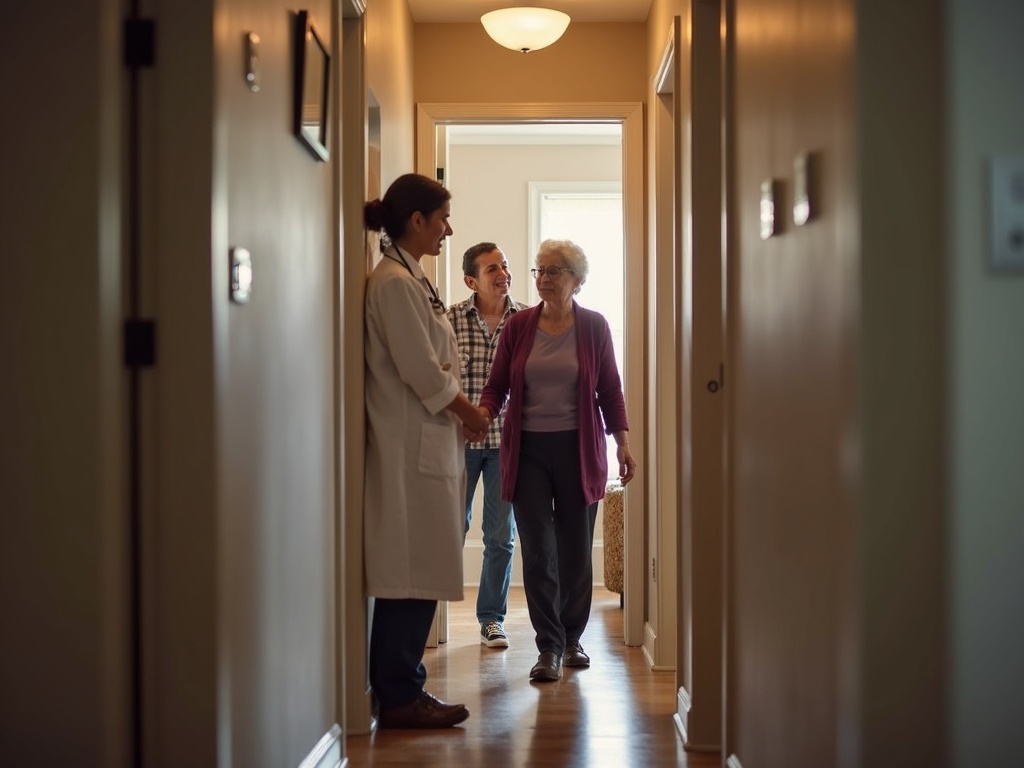
We see this pattern constantly. Not because families don't care, but because no one built a bridge between the hospital and home. For older adults living alone, that bridge has to be a physician who shows up in person, sees the actual environment, reviews what is actually being taken, and catches what a phone call cannot.
A doctor's visit to the home is not a luxury for this population. It is the only way to know what is actually happening. A chart note from a hospitalist and a scheduled outpatient appointment weeks away are not a care plan. They are a gap. And in that gap, patients deteriorate.
The reality is that safe recovery requires physician oversight in the home. This prevents medication errors, catches complications before they become emergencies, and ensures the treatment plan actually works for that specific patient. This is why home doctor visits for older adults are not optional for this population. They are the standard of care that keeps patients home and prevents rehospitalizations.
What Goes Wrong in the First Week Home
Hospital discharge leaves older adults weak and disoriented. Their energy is depleted, their routine is shattered, and they face new medical conditions with little guidance. For patients living alone, this becomes a medical emergency waiting to happen.
We know this pattern because we've coordinated hundreds of discharges. Patients return home confused about their medications and unable to manage new limitations. Their physicians assume someone else is handling the transition. Their families assume the hospital covered everything. The patient falls through the gap. As the physician, I am responsible for ensuring this handoff succeeds, not just happens. The risks that emerge in those first seven days are predictable and preventable.
What we see in those first days:
Medication errors: Patients receive a discharge list with five new medications and instructions to stop three others. They take the wrong doses, double up on duplicate medications, or skip critical treatments. This leads to dangerous drug interactions, cardiac events, or treatment failure.
Falls and injury: Hospital stays weaken patients. They return home unsteady and attempt normal activities like showering or climbing stairs. The fall happens within 72 hours. The injury sends them back to the emergency room.
Missed deterioration: Patients cannot recognize when their condition worsens. New shortness of breath, swelling in the legs, or increasing confusion are warning signs that need immediate medical assessment. Without daily monitoring, these progress to crisis.
Poor nutrition and dehydration: Patients cannot shop for groceries or prepare meals. They eat processed foods or skip meals entirely. Dehydration accelerates. Recovery stalls and infection risk increases.
These complications are not rare events. They are the standard outcome when vulnerable patients navigate the transition alone.
When Your Parent Needs Home-Based Support
You know your parent better than anyone else. When something feels off during your weekly phone calls or weekend visits, trust that instinct. These specific patterns point to the need for professional home-based support.
We know these warning signs from hundreds of patients. During visits or calls, watch for:
Confusion or memory problems: They repeat the same questions, forget what you discussed yesterday, or cannot remember discharge instructions from the hospital.
Problems with daily activities: They struggle with dressing, bathing, meal preparation, or basic hygiene. Mail piles up. The house looks unkempt in ways that were never a problem before.
Medication errors: They cannot explain their medication schedule. Pill bottles sit untouched. Their weekly pill organizer is filled incorrectly or not at all.
Balance and mobility issues: They move unsteadily, grab furniture for support, mention near-falls, or express fear about walking to the bathroom at night.
Changes in mood, appetite, or weight: They sound withdrawn, express hopelessness, show no interest in food they used to enjoy, or have unexplained weight loss.
Any of these patterns means the current support system is not working. It is time to bring in professional home-based care, starting with a physician who can evaluate your parent's needs in their own home where they feel most secure.
In-Home Physician Care
Same-day urgent care appointments, in the home
Home-based physician visits for older adults and veterans. Call and get a same-day appointment. Serving NYC, Nassau, Suffolk, Westchester, Putnam, and Duchess counties.
Request a Home Visit or call (516) 806-2223
How In-Home Physician Visits Prevent What Goes Wrong After Discharge
When people ask me what I do, I tell them I prevent the predictable disasters that happen when patients leave the hospital without physician oversight. This is what we see: patients discharged with new medications they don't understand, returning to homes with safety hazards the hospital never assessed, and waiting weeks for follow-up while their condition deteriorates. In-home physician visits are not convenience medicine. They are comprehensive medical care provided directly in the patient's home during the vulnerable transition from hospital to outpatient care.
What does this look like in practice? When we walk into a patient's home, we see what the hospital discharge planner cannot. We see the real environment where recovery happens or fails.
First, we tackle medication reconciliation. I sit at the kitchen table with every pill bottle the patient owns. We compare what the hospital sent home versus what they were taking before admission. We identify duplicates, missed medications, and dosing errors. I create a medication schedule that makes sense for their daily routine. Most agencies don't do this level of medication review. We know this prevents adverse drug reactions and hospital readmissions.
Next is the home safety assessment. The hospital cannot see the loose throw rug by the front door or the broken step rail. I can. I assess fall hazards, lighting, bathroom safety, kitchen access, and emergency planning. These observations become actionable safety modifications: grab bars, improved lighting, medication storage, emergency contact systems. We've seen hundreds of patients avoid falls because someone actually looked at where they live.
Then, I perform a comprehensive physical assessment. Examining a patient in their familiar environment reveals what a rushed clinic visit cannot. I assess wound healing, mobility, cognitive function, and medication side effects. I can hear lung sounds without emergency room noise. I can observe their actual functional capacity, not what they report it to be. This is clinical medicine in the real world.
Finally, I coordinate the treatment plan. I am the physician. I communicate directly with specialists, home health nurses, physical therapists, and pharmacies. I ensure the discharge plan actually makes sense for this specific patient in this specific home. I answer questions that prevent emergency room visits at 2 AM. This coordination doesn't happen automatically. Someone has to make it happen. That someone is me.
What We Know Prevents Hospitalizations
This approach works because it addresses the root causes of readmission. We don't just treat symptoms. We prevent the complications that send patients back to the emergency room.
The most critical outcome is preventing hospital readmissions. When we catch medication errors early, identify fall risks in the home environment, and coordinate with specialists before problems escalate, we keep patients stable. This is what we measure. This is what matters for your mother or father's recovery.
For patients, the difference is control over their care. They understand their medications because we explain them at their kitchen table. They follow discharge instructions because we review them in the setting where they'll be carried out. This clarity prevents the confusion that leads to complications.
For families, you have a physician who knows your father's home environment, his medication routine, his daily patterns. When something changes, you can call us for same-day urgent care at home. No more guessing whether this requires an ER visit. We serve NYC, Nassau, Suffolk, Westchester, Putnam, and Duchess counties. Call us at (516) 806-2223 to schedule an in-home physician visit.
Will Medicare pay for home care for seniors?
Yes, Medicare Part B covers certain in-home physician visits for patients who are considered homebound, meaning it is very difficult for them to leave the house. Coverage specifics can vary, so it is important to confirm with the provider. Many services are designed to be accessible for those who need them most.
Does home care reduce hospital readmissions?
Absolutely. Studies consistently show that coordinated in-home care, especially when led by a physician, significantly reduces the rate of hospital readmissions. By managing conditions proactively and addressing risks in the home environment, this model of care prevents complications from escalating into emergencies.
What are the signs that an elderly person is deteriorating?
Key signs include sudden confusion or memory loss, unexplained weight loss, loss of interest in usual activities, poor hygiene, frequent falls, and difficulty managing daily tasks like cooking or finances. If you notice a cluster of these signs, it is a clear signal that a medical evaluation is needed immediately.
What to do when you can no longer care for an elderly parent?
This is a difficult and emotional point for many families. The first step is to have an honest conversation with your parent, if possible, and other family members. Then, seek a professional assessment from a physician or geriatric care manager to understand their full range of needs and explore options like assisted living or skilled nursing facilities.
What are complex care needs?
Complex care needs refer to situations where a patient has multiple chronic conditions (like heart failure, diabetes, and COPD), cognitive impairment like dementia, and functional limitations. These patients require intensive, coordinated care from various specialists and support services to manage their health effectively and remain safe at home.
Taking Responsibility for a Safer Recovery at Home
The period after a hospital stay should be a time of healing, not a time of fear and uncertainty. As physicians, I believe our responsibility extends beyond the hospital walls. We must ensure our patients, especially older adults and veterans living alone, have the support they need to recover safely. We must treat every patient as if they were our own family.
Passing off a vulnerable patient with a packet of papers is not enough. We have to do more. An in-home physician visit is more than just a medical appointment. It is a commitment to seeing a patient through their recovery, a promise that they will not be left to figure things out on their own.
If you are worried about a loved one returning home from the hospital, I encourage you to explore in-home physician options. It is a critical step in bridging the care gap and providing the safety, support, and peace of mind that every patient deserves.
Next Step
Request In-Home Care Services
Homemaking, personal care, companion care, skilled nursing, therapeutic services, and home-based physician visits. Serving NYC, Nassau, Suffolk, Westchester, Putnam, and Duchess counties.
Request Services or call (516) 806-2223